Friday, August 15, 2008

Of Wormholes and Life


When a group of 13 intrepid hikers set out on Doc's Super Hike in the Black Hills, we had no idea how challenging it would be. This unmarked hike was developed years ago by a man who liked to squirm through small spaces he called "wormholes." This hike was up, down, over, under, and through granite, creeks, bogs, sheer cliffs, fallen trees, and slippery pine cones. By the time it was over, we all felt we'd accomplished something. Many of us had scrapes and bruises to prove either the difficulty of the hike or our lack of coordination.

The wormholes our hiking guide took us through were each different--rock passageways so small as to be unnoticeable to the average passerby. A person can fit through there? A friend said that in New Hampshire these places were referred to as "lemon squeezers," an apt name considering how the granite grated our skin!

Each wormhole along the trail posed its own challenges. Some were easier for tall folks, some for short. Some tested balance and coordination more than others. We all made it through--not to go through would have been even more difficult!--with the help of the others. Helping hands, boosts, pulls, grabbing packs, and giving directions made us a triumphant team by the end of the journey.

One wormhole was especially difficult because I couldn't see where I was going. My head was above the rock and my shoulders squeezed and twisted through the opening. My arms struggled to hold me up while my feet sought purchase on rock below--if there WAS rock below! Was it far? Would I fall? If I fell, would I be okay? Could I breathe going through the tunnel? How badly would I get scraped? Finally, like the hikers before & after me, I let myself go, found the foothold, and scrambled out into daylight.

Our guide remarked that the wormhole was a test of faith. He's right. I have learned that in wormholes--and in life--in the darkest of times, if I keep going, the light will come.

Tuesday, July 29, 2008

A Poet’s Place

What environment do you think is conducive to writing poetry? Do any of these come to mind?

A mountain cabin
Beautiful views
Walking paths
Birdsong
Deer and other wildlife
Tall pines and spruce
Wild flowers
Solitude
A fireplace
Books
Time for reflection
That list adds up to the home of South Dakota’s first Poet Laureate and cowboy poet, Badger Clark. Clark built his own cabin in the late 1920’s on property in the Black Hills, where he lived until his death in 1957. Now a tourist site in Custer State Park http://www.blogger.com/www.sdgfp.info/Parks/Regions/Custer/badger.htm, visitors can see Clark’s many pair of cowboy boots in a row in his bedroom, note what basic kitchen products he used, and imagine him in contemplation before the fire.

A short loop path offers stops with snippets of Clark’s poetry. Sunset, Collier’s, and Arizona Highways are just three of the many magazines that published Clark’s work. "A Cowboy's Prayer" is one of his best know poems, but is often published with "Anonymous" as the author. He dedicated the poem to his mother. The text is here: www.sd4history.com/Unit7/cowboyprayer.htm

His books have never gone out of print—rare for any author, but especially a poet. The Badger Clark Memorial Society www.badgerclark.org/ promotes his work and helps maintain the Badger Hole.

More information about Clark and his influence on cowboy and western poetry is available here: www.cowboypoetry.com/badger.htm .

I would add two things to the list of environmental needs for a poet: modern plumbing and electricity! Still, I appreciate Clark’s environment and the sentiment in his poem “Ridin’” (full text here: www.badgerclark.org/ridin'.htm) :

I don't need no art exhibits

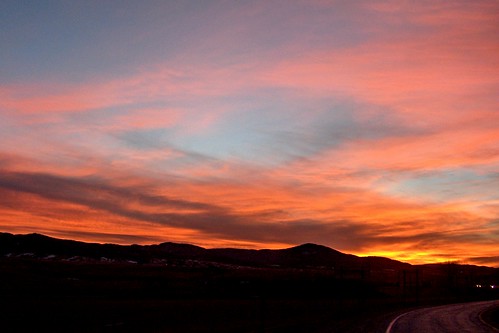
When the sunset does her best,

Paintin' everlastin' glory

On the mountains to the west


Saturday, July 19, 2008

Swinging on Birches

The birch trees on Isle Royale stand tall, strong, and straight as pillars. Their white bark lightens the dark woods. Pieces of bark peel off and are carried by animals or wind as if to leave notes for hikers along the trail.


The birch trees Robert Frost wrote about were bowed down by wind, weather, or--maybe a boy riding them! Frost considers that perhaps a person could ride a birch tree all the way to heaven, which of course is foolish. Yet he ends with the line: One could do worse than be a swinger of birches.
In respect of copyright law, I offer this link to the full text of the poem:
What kind of fantastical conveyance would you like to transport you?

Monday, July 14, 2008

Take It All In

A trip to Isle Royale National Park in Lake Superior (http://www.nps.gov/isro/) awakened our senses. On the 6 hour ferry ride to the island, National Park Service Ranger Paul talked about the environment and encouraged us to “Take it in! Take it all in!”

Pristine wilderness hiking trails gave us mountaintop views of Canada, marshy meadows filled with water lilies and wildflowers, and rocky shorelines with crashing waves.


Pink, purple, yellow, and white flowers popped out of the green brush.


We were ever alert for wildlife. First we saw moose scat, then tracks, and finally, the moose herself.


Squirrel, fox, and hare also crossed our path—or we crossed theirs. The ever-changing sky held white and gray clouds as well as eagles, ducks, loons, mergansers, and other birds.

Our boots thudded on the pine-needle carpeted path. Near the lake, the loons laughed at us (well, maybe it wasn’t personal). The waves hit the rocks with a relaxing rhythm. (To see images of loons and hear their calls, go to http://www.ns.ec.gc.ca/wildlife/loons/images.html).


The scent of pine, fresh air, decomposing vegetation, and dirt mingled on the trail. Back at the lodge, we looked forward to the aroma—and taste—of a well-cooked dinner.


We did our best to take it all in.

Taking it all in when we’re on vacation is one thing, but can we remember to take it all in when we’re back home? The robin bobbing in the back yard is not exotic, but is still amusing to watch. The way the ash tree dances in the wind, the smell of steak grilling, and the promise of blossoms on our tomato plants are ordinary parts of our day. And we take it in. We take it all in.

What are you taking in today?

Friday, July 4, 2008

Happy Independence Day!


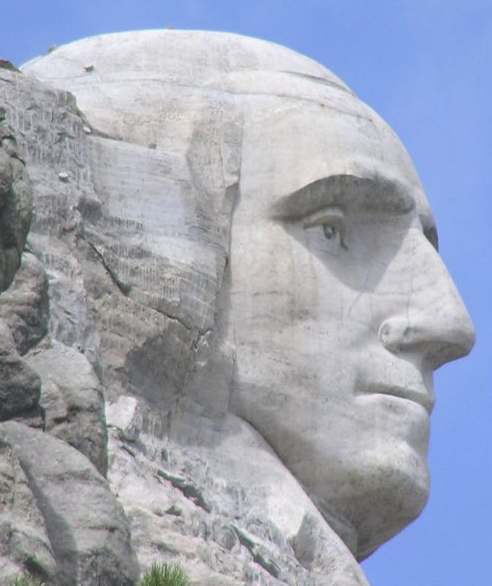
A recent trip past Mount Rushmore gave me a glimpse of George Washington's profile. It's fitting to think of him, the Father of our Country, today. He fought when necessary, negotiated when he could, motivated his bedraggled army, and served his country as President--not king-- in spite of his preference to be a quiet Virginia farmer. That's a lot to admire.
Washington was against political parties and geographical favoritism, always considering the good of the whole. Today, we complain about the government and argue about political issues. A look at Washington's life reminds us that we are the government and one person can make a difference.
Here's more:

Friday, June 27, 2008

What Color is Your Homeland?


A colleague and I attended a conference several states away. It was a valuable conference, but by the time it was over, we were ready to come home. Looking out the plane window after 30 minutes of flight, I saw green. The next time I looked, I poked my colleague and said, "Look! It's brown!" Hooray! We were getting closer to our arid home!


Now I've moved, and my eyes are adjusting to green, green, green. At first I was thrown by the lack of colors in the pallette here. I still love my desert reds and browns. But now I'm getting acclimated. Green is no longer boring, but fresh, lush, verdant, and full of promise.

What color is your homeland and what does that mean to you?

Saturday, June 21, 2008

Synapses Afire!

Experts say that to keep the brain alert, active, and creative, we need to keep challenging it and trying new things. If that is so, you might see smoke coming out my ears, my synapses are firing so fast!

Since I last wrote, I have (with the assistance of dear ones--THANK YOU!) packed up my household of 10 years, left my job of 17 years, moved two states away, gotten married, taken a honeymoon to a place I'd never been, merged two households, met new in-laws, and remember where I put the things I've unpacked. I've changed my name, address, phone number, drivers license and license plates, hairdresser, medical caregivers, church, grocery store, and umpteen other things.

Though I was familiar with my new city, I still need to concentrate on what route to take to my destination and back, mindful that Hansel & Gretel's breadcrumb method didn't work. So far, I haven't gotten hopelessly lost or needed more than two tries to get where I was going. But I do allow for extra time, and my usual efficient self feels stymied by having to try so hard to do the basics.

If the brain experts are right, all this mental exercise will result in excellent mental health and acuity into old age and happily ever after.

To keep your brain sharp, see the puzzles at Brain Metrix: http://www.brainmetrix.com/index.htm